,,Die Adventszeit ist eine Zeit, in der man Zeit hat, darüber nachzudenken, wofür es sich lohnt, sich Zeit zu nehmen.” Gudrun Kropp
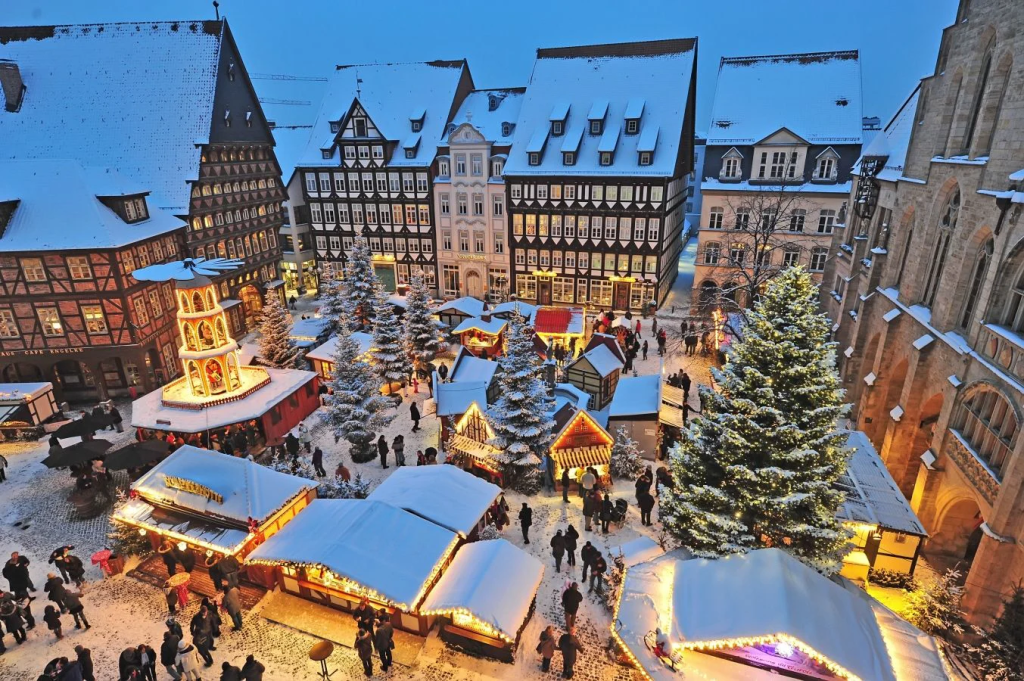
It’s finally the Winter Break and I am excited to get some downtime with friends and family. December is an interesting month I find – I both love and loathe it. I love it for the chance it gives me to reflect on the year and the things I’ve accomplished, but loathe it for the tiredness and constant busyness it brings. However, the lovely quote above from Gudrun Kropp definitely resonates, and this year I took my time to review one of my favourite IB Language B units – Christmas traditions in Germany. In this post (my very first one, so I apologize for any poorly structured parts in advanced!), I am going to talk through how I generally approach planning units for my IB course, and how this relates directly to my unit on festivals and traditions.
Christmas and the Advent period in the German speaking world is without a doubt one of the most important festivals that is celebrated, and the cultural festivities that take place across the region are something that fascinated me as a young German language learner; some of my fondest memories of being in High School were getting to visit the German markets in Manchester, and not having the ‘dead’ time of watching random films that I found in other subjects (no shade to teachers who do this – I can definitely appreciate the need to just get through those last lessons of the year!). For that reason, I’ve built in a series of different lessons through my Year 7-11 curriculum that provide students with a solid understanding of the general traditions that take place.
What are the key topics that I will focus on?
By the time we have reached the IB course, students need to have a much more robust understanding of the significance of the traditions that take place than the superficial knowledge of what happens. To start with, I selected the following three main topics to focus on:
- Die Adventszeit – the historical and religious background to the festivities; students come to this with a knowledge of the traditions already, so we have a solid base to work with.
- Weihnachtsmärkte – students have visited the local Christmas market most years leading up to their IB studies, so I take a different angle here – the economic impact of the Weihnachtsmärkte on the German speaking world
- die Bescherung – students can relate to the idea of sharing gifts for different occasions, so we delve a little more into TOK concepts for this.
What are the key questions that students will investigate?
To support my planning of the units, I start by mind-mapping many different questions that I would like students to investigate and ultimately answer – these form the basis of my thematic questions that I provide my students in a speaking dossier (see below!). I narrow this list down to a core set of questions that I present to students at the start of each mini unit within the broader unit. For this unit, I went with these:
Die Adventszeit: Warum ist die Adventszeit eine wichtige Zeit im deutschsprachigen Raum?
Die Weihnachtsmärkte: Inwiefern sind die Weihnachtsmärkte wichtig für die deutsche/österreichische/schweizerische Wirtschaft?
Die Bescherung: Warum beschenken sich Menschen zur Weihnachtszeit?
These broad questions form the basis of what we discuss, but allow for significant challenge and support across all attainment levels at this point.
How will I assess the students?
As many of you will know, the IB Language B course is a rigorous and challenging course, and the assessments that students sit are broad in the skill sets required. As with all units, I make sure all four skills (listening, reading, writing and speaking) are all developed, but I tend to only formally assess the writing and speaking; I find the productive skills to be the ‘performance’ element of the language, and so I like my students to have as many opportunities to practice these as possible. For this unit, I will have two formative assessment points and one summative assessment:
1 – formative one – Writing – students write a diary entry about their experiences at a German market, which allows them the opportunity to practice their skills at writing personal texts. For added creativity, I usually throw in a silly situation (they got stood up by their boyfriend/girlfriend, or they had an argument with their family, or they met the love of their lives there!) which helps link their thoughts to their previous unit on families and relationships.
2 – summative – Writing – I ask students to write a personal text to a friend talking about their experiences at a market in Germany, and encouraging/recommending them to go too. Being able to apply the features of a personal text across different text types can be challenging for students, so they are able to use the feedback given on their formative writing piece to achieve the criteria required on this task.
3 – formative – Speaking – Dependent on how far I am through my course (and the bits I need to chop out!), we either have a go at practicing the photo card element of the speaking assessment and work together as a group to discuss how we can structure a presentation, or we do a role play based on gift giving. Both help students think about their language creatively and strategically.
Of course, reading and listening form the basis of everything we do, and these two skills are predominantly seen in the resources that I choose.
Which resources will engage my students?
As with any unit, this is usually the most interesting part of the planning process – and the most daunting! Due to the significance of Christmas in Germany, there are huge amounts of resources out there to use. Here are some of my favourite ones and how I’ve exploited them in my lessons.
Adventsbräuche in Deutschland: https://www.youtube.com/watch?v=TD9gM4NOt1Y (Video from DW.DE/Euromaxx)
I love this video for a variety of reasons – we get to practice the challenging äu sound together, and it features lots of good cultural facts that students can discuss and note down, to evidence their knowledge of the ‘target culture’.
Souvenirs für Weihnachtsromantiker: https://www.deutschland.de/de/topic/leben/mobilitaet-reise/souvenirs-fuer-weihnachtsromantiker
Having lived in Saxony during my time in Germany, this article allows me to discuss my own personal experiences in Germany whilst linking it to the popularity of these items not only in Saxony, but across the world (especially the USA!).
Weihnachtsbaum der Superlative: https://www.dw.com/de/ein-weihnachtsbaum-der-superlative/l-51621425 (DW Deutsch lernen video)
I love these DW videos – they have ready made listening comprehension tasks, alongside vocabulary and grammar tasks. The topics are always interesting, and this one relates very nicely to the topic.
Whilst not the best blog post, I’m pretty proud of my first attempt at writing something down!
 Sam's Blog
Leave a comment